
Lerebours’s thesis is the most comprehensive work ever produced on the history of Haitian art
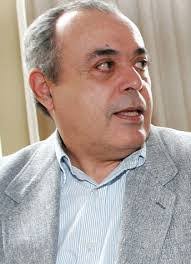
In a contribution published as part of the Centre d’Art’s initiative dedicated to the intellectual legacy of Michel-Philippe Lerebours, art historian Gérald Alexis states: “If I were to summarize in one idea Michel-Philippe Lerebours’s major contribution to the understanding of Haitian art, I would say that it was an awakening, and it is essential that it remains alive in the minds of new generations. For this, I will never cease to be grateful to him.”
Michel-Philippe Lerebours, His Legacy.
In 1989, Michel-Philippe Lerebours published Haïti et ses peintres. It was originally his doctorate thesis at the Sorbonne in Paris. This two-volume book was and is still the most comprehensive work on the history of Haitian art ever produced. Earlier, in 1956, Philippe-Thoby Marcelin, poet and novelist, had published his Panorama de l’art haïtien. Thoby-Marcelin’s assessments showed, however, a certain subjectivity, which Lerebours managed to avoid in his considerations.
Unsure of the possibilities of publishing his research, Lerebours managed to have Haitian art history added to the many classes offered at the French Institute. As an introduction to this course, a series of lectures on major aesthetic theories was offered and illustrated whenever possible by examples drawn from Haitian art history. The idea was to give it the universal dimension it deserves. This primary objective was then the focus of his two-volume book published later. However, being first and foremost an academic work, its format makes it accessible to a smaller audience. Also, the use of the French language added to the difficulty of assessing its impact on the perception of Haitian art abroad.
Known for his extensive knowledge on the subject, Michel-Philippe Lerebours was often consulted by curators of major Haitian art exhibitions, notably the one presented in 1979 at New York’s Brooklyn Museum. This exhibition, dealing essentially with the so-called primitive/naïve art, meant that his involvement was very limited since, at the time, foreign art critics and historians were the experts defining what was truly Haitian art. I strongly believe that, following this experience, he felt the need to have Haitians who could recognise the richness and diversity of Haitian artistic productions, making them appreciated by others.
It is undeniable that Michel-Philippe Lerebours played an important role in the way Haitian art and its local public developed. Indeed, towards the end of the 1970s, more people, young and old, visited the numerous art exhibitions in galleries, at the MUPANAH, the Musée d’Art Haïtien, and cultural institutions such as the Haitian American and French Institutes. As a matter of fact, he curated some of these exhibitions. The result is that, for many, art became an important means of making money, and this factor became crucial in the development of careers where commercialisation outdid creation. Michèle Montas, a journalist back in Haiti, noted in a May 28, 1973, article in Le Nouvelliste “the existence of a certain mass-produced, lazy, and profitable style of painting.”
To address this problem, Michel-Philippe Lerebours created, in October 1981, the first edition of the Connaître les Jeunes Peintres, a yearly competition where young talents were given the opportunity to rise above commercial concerns. They were then able to give their very best and have a chance to be known to the art-buying public that focused essentially on established stars.
Unfortunately, in a January 26, 2015, interview in Le Nouvelliste, Louis Dubois, a member of the Board of Directors of the Musée d’Art Haïtien, pointed out that the works produced by these young artists were “very often imitations of works by artists who have achieved a certain fame”.
Because of all this, and because of the quasi inexistence of art criticism in the local press, it is difficult to say if Michel-Philippe Lerebours succeeded in shaping a way of thinking, teaching, or transmitting Haitian art. Such a task was far too all-encompassing for one man.
Through his experience with Haitian communities abroad, he had been able to gain the trust of artists in the diaspora who were struggling to sustain their artistic practice. Many of them often exhibited in Haiti, thus revealing the ways in which contact with major centers had shaped their artistic practice. Naturally, some believed that this was a way for him to foster friendships formed in exile. Nothing could be further from the truth. In my opinion, Michel-Philippe Lerebours never contributed to the canonization of any artist. His major concern was to point out those who deserved to be known.
In the early days of his career, he was very supportive of the artists of the Foyer des Arts Plastiques (Centre for Visual Arts). As a matter of fact, he was the one who proposed the term “realism of cruelty” (réalisme de la cruauté) to define the art of this avant-garde. More concerned with social realities, this art was perceived as a political weapon. Even though the authorities seemed troubled, the real censorship came from individuals in the society who felt that these works were too ugly to obtain a place in the world of Haitian art. Yet, the art of the Foyer carried meaning. The truth is that its objective was to offer an alternative to the established system. It therefore was seen as outrageous.
Although Michel Philippe Lerebours was believed to be a dedicated defender of modernism in Haiti, he strongly supported the so-called primitive/naïve movement, giving it its true meaning and, above all, rejecting the idea of “miracle”. He wanted it to be considered for what it truly is: a sincere representation of the life of a society, its culture, and its traditions. He would surely have done the same for these contemporary movements that emerged at the beginning of the twenty-first century. He never opposed self-education, even though he was committed to re-establishing a national school of arts.
It was then, at the École Nationale des Arts (ENARTS), of which he was the first director, that Michel Philippe Lerebours revealed his vision of what art education should be. The curriculum he developed in 1983 was based on bringing together the different artistic disciplines. The country would then have professionals capable of pursuing careers not only in the arts but also in art education, the media, and the management of cultural institutions. A program structured in this way could easily adapt to the variety of expressions gathered under the label “contemporary art,” which was emerging.
It is true that his Haïti et ses Peintres considers art within a well-defined timeframe (1804–1980) of our history, but I am not certain that Lerebours’ approach would be different if the book were revised to consider some of the drastic changes that have occurred in the visual arts over the last few decades. The truth is that mindsets change with time, as do technical means. Yet, art remains and will always remain the same: a human creation, endowed with aesthetic value. And since humanity is involved, we must always return to this other universal lesson, which Michel-Philippe Lerebours emphasized and that those who carry the torch must keep in mind: a work of art cannot be viewed outside of its social, cultural, historical, economic, and political context—these factors are determinants in the creative process.
If I were to summarize in a few words Michel-Philippe Lerebours’s major contribution to the understanding of Haitian art, I would say that it is an awakening, and it is essential that it remains alive in the minds of new generations. That is why I will always be grateful.
Gerald Alexis
About Gérald Alexis
Gérald Alexis is an art historian, columnist, and Haitian art critic based in Québec since 2004. A specialist in visual arts, he has served as curator or co-curator of several major exhibitions, the most notable of which remains Magiciens de la Terre (1989) at the Centre Pompidou.
He holds a degree in art history from the University of Texas (United States, 1991). He is a member of the AICA (International Association of Art Critics) and ICOM (International Council of Museums). He has also received grants from the Fulbright Foundation, the Institut canadien de Québec, and PEN Canada.
In 2006, he completed a residency at the Maison de la littérature de Québec. Since 2007, he has been a project coordinator at CIDIHCA (International Centre for Documentation and Information on Haitian, Caribbean, and Afro-Canadian Affairs). He also works as an arts and heritage advisor, contributing to the enhancement of various historical and cultural sites in Canada.